

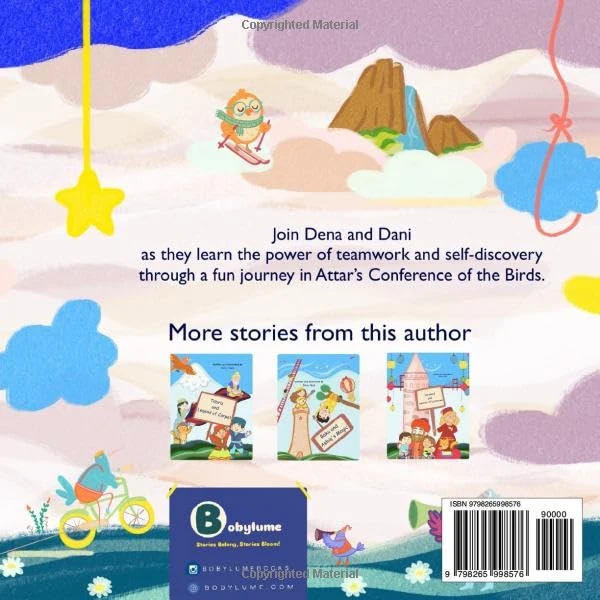
Standalone picture book · Written and illustrated by Bahar Majd
Let’s Fly, But Where? retells The Conference of the Birds (Mantiq al-Tayr), the beloved 12th-century Persian poem by Attar of Nishapur, for children aged 5 to 11. In Attar’s poem, the wise Hoopoe leads the birds of the world on a quest to find the legendary Simorgh, and every bird, from the proud peacock to the worried Botimar, has a personality children recognise and a lesson to share.
Dena and Dani are on a mission: their class needs a leader for a group project. But who should it be? The strongest, the smartest, the fastest? No one can agree.
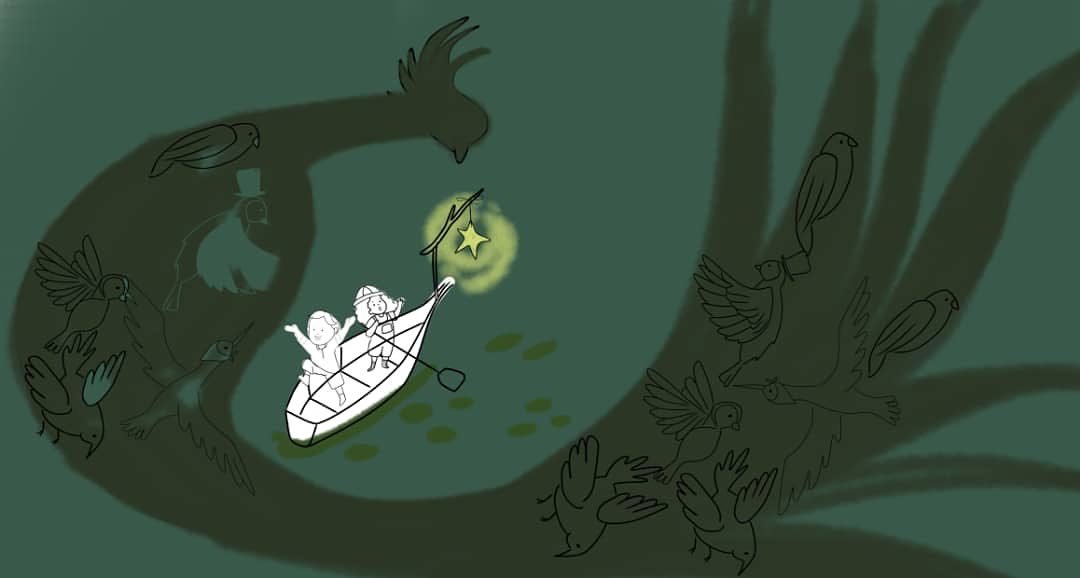
Their search whisks them into a magical world of birds who are also looking for a leader, and who set out to find the legendary Simorgh, king of the birds. Together they soar across wondrous lands, each one full of lessons about courage, teamwork and discovery. Along the way they meet a peacock too proud to risk her feathers, and a worried Botimar who learns to cope with its fears and keep flying.
At the end of the journey, Dena and Dani realize a powerful truth: there is no single leader. Every member of a team brings something unique, and together they create something greater than any one alone. It is the same discovery Attar’s birds made more than 800 years ago.
Buying in Canada? Find it on Amazon.ca →
- Ages5–11
- SeriesStandalone picture book
- Pages88
- Format8.5 × 8.5 in paperback
- PublishedSeptember 18, 2025
- ISBN9798265998576
- ThemesTeamwork • Leadership • Self-discovery
- Great forGroup-work lessons, leadership and belonging
As an Amazon Associate, Bobylume earns from qualifying purchases.
Look inside
The legend behind the book
From Attar’s Conference of the Birds to Let’s Fly, But Where?
Around 1177, the Persian poet Farid ud-Din Attar of Nishapur (Attar Neyshaburi) wrote Mantiq al-Tayr, known in English as The Conference of the Birds. It is one of the great classics of Persian literature. In it, the birds of the world gather because they have no king. The wise Hoopoe tells them about the Simorgh, a legendary bird who lives on Mount Qaf, and offers to lead them on a long journey through seven valleys to find it.
Every bird has its own personality, and its own reason to stay home: the nightingale can’t leave its rose, the peacock is too proud of its feathers, the duck won’t leave its pond. The Hoopoe answers each one with patience, stories and courage. One by one, many birds still turn back.
Only thirty birds reach the end, and there they discover a beautiful secret. In Persian, si morgh means “thirty birds”: the king they had been searching for was all of them, together.
Let’s Fly, But Where? retells this timeless journey for young readers through joyful illustrations, simple storytelling and playful examples. Children meet the birds, laugh at their excuses, learn something from each personality, and discover with Dena and Dani that a team is strongest when everyone belongs.
Meet the birds, and what each one teaches
The Hoopoe
The wise guide of Attar's poem. It listens to every bird, answers each excuse in its own way and keeps the whole flock flying together.
Lesson: A good leader knows every member of the team.
The Simorgh
The legendary king of the birds, waiting on Mount Qaf. Every bird on the journey hopes to find it.
Lesson: Big goals are worth the long road.
The Nightingale
So in love with its rose that it doesn't want to leave the garden.
Lesson: Loving what we have shouldn't stop us from growing.
The Peacock
Proud of its glorious feathers. In our book: "I'm too beautiful. Why risk my feathers?" Can Dena and Dani convince her to come along?
Lesson: What we do matters more than how we look.
The Duck
Happy in its pond and unwilling to leave the water for a journey into the unknown.
Lesson: Brave things happen outside our comfort zone.
The Owl
Guards a hidden treasure among old ruins and won't leave it behind.
Lesson: Friends and adventures are worth more than things.
The Sparrow
Feels too small and too weak to make such a big trip.
Lesson: Even the smallest member has a place on the team.
The Botimar
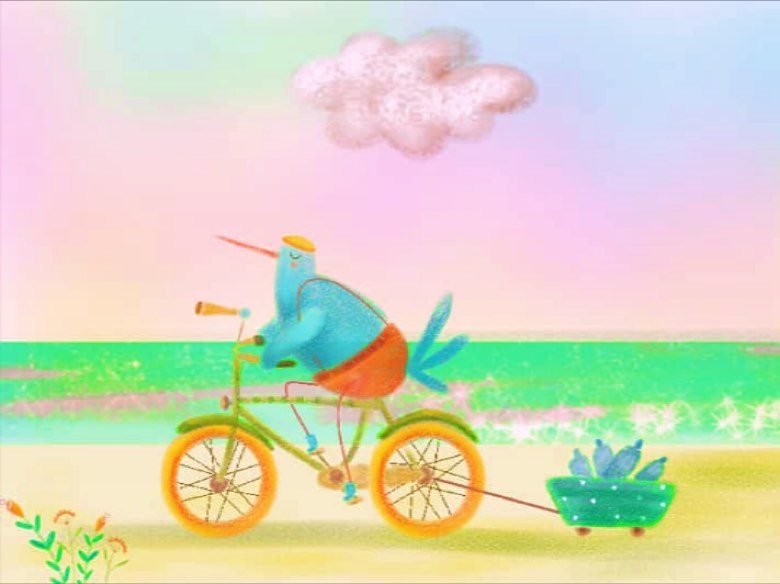
In Attar's poem it sits by the water, afraid it will run dry. In ours, it learns to cope with its worries, packs a few bottles of water and keeps flying.
Lesson: It's okay to feel worried, and to keep going anyway.
 Journal of Management History · 2026
From story time to scholarship
A classic we study as carefully as we retell it
Bobylume brings multicultural heritage to life for children and in academia. Research on Attar’s poem co-authored by Bahar Majd, “The conference of the birds: lessons in leadership and management from 12th-century Persia”, was published in the Journal of Management History (Emerald, 2026).
The Conference of the Birds (Mantiq al-Tayr) was written around 1177 by Farid ud-Din Attar of Nishapur, known as Attar Neyshaburi, one of the great poets of Persia. It tells of the birds of the world who, led by the wise Hoopoe, journey through seven valleys in search of their legendary king, the Simorgh. The article treats the flock as an organization and the Hoopoe as its leader, showing how a 12th-century epic speaks to today’s ideas about leadership and management. It is the same story that inspired this book.
The article reads the Hoopoe as a leader who motivates each bird in its own way and brings very different personalities together around one shared purpose. That is the heart of Let’s Fly, But Where?, told for children.
Safaei, B., Majd, B. and Baba, V. (2026), “The conference of the birds: lessons in leadership and management from 12th-century Persia”, Journal of Management History, Emerald Publishing. doi:10.1108/JMH-05-2025-0086
Read the article →More stories by Bahar


